
Evidence summary: Vitamin D is important for preventing and correcting deficiency and supporting normal bone and muscle health. Extra high doses have not consistently improved outcomes in generally healthy adults who were not selected for deficiency.
Reading time: Approximately 4 minutes
Introduction
Vitamin D3 has a clear nutritional role, particularly in the UK where seasonal sunlight limits vitamin D production. That does not mean more supplementation always creates stronger bones, better immunity or greater energy.
Deficiency prevention, treatment of diagnosed deficiency and high-dose disease prevention are different questions. They require different recommendations and evidence.
This guide explains the benefits alongside practical UK advice.
What Is Vitamin D3
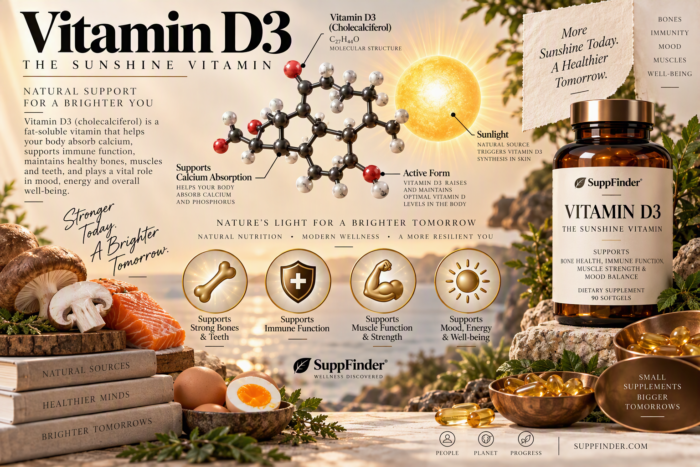
Vitamin D3, or cholecalciferol, is one form of vitamin D used in supplements. Vitamin D helps regulate calcium and phosphate, supporting normal bones, teeth and muscles.
Products may use animal-derived sources or suitable vegan alternatives. Check the label if the source matters to your diet.
Evidence Rating
| Goal | Assessment | Important distinction |
| Preventing inadequate vitamin D intake | Established public-health role | UK advice varies by season and risk group |
| Treating diagnosed deficiency | Established clinical role | Treatment doses differ from routine prevention |
| Preventing fractures in all healthy adults | Not consistently supported | Adequate status and patient selection matter |
| General energy or immune enhancement | Not established as a universal effect | Normal nutrient function does not prove extra benefit |
These are editorial summaries, not formal GRADE ratings.
Potential Benefit One Deficiency Prevention
NHS guidance advises adults to consider 10 micrograms, or 400 IU, daily during autumn and winter. Certain groups should consider year-round supplementation, including people with little sun exposure and those with dark skin.
This is a practical prevention recommendation. It should not be presented as a treatment regimen for someone already diagnosed with deficiency or a reason to take increasingly large amounts.
Potential Benefit Two Bone and Muscle Health
Vitamin D is required for normal calcium handling, and inadequate levels can harm bone health. Correcting deficiency is therefore important.
However, evidence that deficiency is harmful does not establish that extra vitamin D above adequate levels keeps strengthening bones indefinitely. The starting status and clinical context matter.
What the Fracture Trial Found
A large VITAL ancillary trial tested 2,000 IU vitamin D3 daily in midlife and older adults who were not selected for deficiency, low bone mass or osteoporosis. It did not significantly reduce fractures compared with placebo.
This does not negate treatment of deficiency. It shows why a broadly positive label for “bone health” should not be interpreted as proof that any adult taking a high dose will prevent a fracture.
Immunity Fatigue and Healthy Ageing
Vitamin D participates in normal physiology, including immune processes. That is not the same as a proven extra immune boost from high-dose supplementation in every user.
Fatigue has many causes. If deficiency is present, correcting it may be relevant to the treatment plan, but persistent tiredness should not automatically be attributed to vitamin D.
Likewise, changes in a blood level do not establish slower ageing or protection against all chronic diseases.
Dosage and Practical Considerations
Check whether the label uses micrograms or IU: 1 microgram equals 40 IU. Count vitamin D from other supplements, including multivitamins and calcium products.
The NHS guidance advises against exceeding 100 micrograms, or 4,000 IU, daily for adults unless directed by a clinician. This is an upper safety limit, not an intake target. Diagnosed deficiency may require a different prescribed plan.
People with conditions affecting calcium metabolism, kidney function or absorption need individual advice. Do not copy a loading regimen intended for someone else.
Safety and Interactions
Excess vitamin D can cause hypercalcaemia and damage organs. Higher doses are not harmless simply because the vitamin is essential.
Check suitability when taking regular medicines or managing a condition that alters calcium balance. Seek advice about concerning symptoms rather than continuing high doses indefinitely without review.
Final Verdict
Vitamin D3 has a clear place in UK deficiency prevention and treatment. The most useful advice is proportionate: follow the relevant seasonal or clinical recommendation, count total intake and avoid treating high doses as a general wellbeing upgrade.
Frequently Asked Questions
Should Everyone Take High-Dose D3
No. Routine UK prevention advice uses a much smaller amount, and more does not automatically improve outcomes.
Does the Negative Fracture Trial Mean Vitamin D Is Useless
No. It studied a particular population and question, distinct from preventing or treating deficiency.
References
Peer-Reviewed Research
Guidance and Background Information
This article provides general educational information and is not a substitute for individual medical advice, diagnosis or treatment.