
Evidence summary: Studies report improved glucose measurements in type 2 diabetes, but methodological limitations and safety questions prevent treating berberine as an established substitute for diabetes medication.
Reading time: Approximately 4 minutes
Introduction
Berberine is widely promoted for blood sugar control. Unlike an ordinary vitamin, it is a plant-derived compound with pharmacological activity and the potential to affect medicines.
Research suggests improvements in some glucose measurements. However, a favourable HbA1c result is not the same as proof that a supplement prevents diabetes complications or works as reliably as prescribed treatment.
This guide separates those questions and explains why a discussion with your diabetes team matters.
What Is Berberine
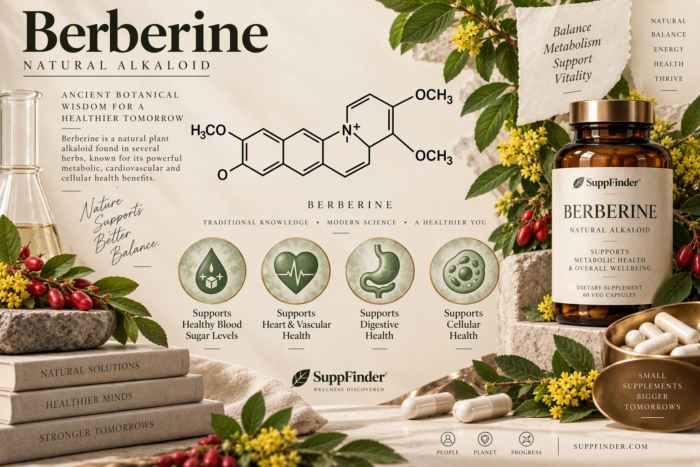
Berberine is an alkaloid found in several plants, including barberry and goldenseal. Supplements often use concentrated berberine salts rather than whole-plant preparations.
It has been investigated in people with metabolic conditions, especially type 2 diabetes. Findings in those groups should not be assumed to apply to a healthy person with normal glucose levels.
Evidence Rating
| Outcome | Assessment | Important limit |
| Fasting and post-meal glucose | Promising | Study methods and background treatments vary |
| HbA1c | Promising | Mostly short-term biomarker evidence |
| Preventing complications | Not established by the cited reviews | Changes in glucose do not prove long-term protection |
| Replacing prescribed medicines | Not established | Reliable equivalence has not been demonstrated |
These are editorial assessments, not a formal GRADE rating.
What the Research Says
A 2022 systematic review found reductions in fasting glucose, HbA1c and two-hour post-meal glucose among people with type 2 diabetes.
A 2024 review also reported favourable glucose outcomes across berberine studies. However, studies of berberine alone and those adding it to other treatment answer different questions. Changes cannot always be attributed to a supplement in the same way across these designs.
Common limitations include small trials, inconsistent blinding, variable doses and relatively short follow-up. A statistically significant average result does not tell every reader how much their HbA1c would change or whether a particular commercial product would reproduce it.
Potential Benefit One Fasting Glucose
Fasting glucose is a useful measurement, but treatment decisions depend on more than one reading. Improvements in a trial should be interpreted alongside baseline glucose, medication use and the full management plan.
Do not add berberine to an existing regimen and then reduce prescribed treatment without advice. Monitoring and medicine changes need to be coordinated.
Potential Benefit Two HbA1c
HbA1c reflects glucose exposure over the preceding months. Some studies report reductions, but the degree of benefit depends on the starting level and treatment context.
Comparing a berberine result with a metformin result from a different trial cannot establish that the treatments are equivalent. Well-designed direct comparisons and longer-term outcomes are needed.
Potential Benefit Three Other Metabolic Markers
Some studies also report changes in lipids or insulin-resistance estimates. These are research findings rather than proof that berberine prevents heart attacks, reverses diabetes or provides a general metabolic “reset”.
Keep the clinical question specific: what outcome improved, in whom, with what preparation and alongside which treatment?
Dosage and Practical Considerations
There is no UK nutrient requirement for berberine and no universal self-treatment dose for diabetes. Studies have used different divided-dose regimens; choosing a dose from a label does not resolve suitability or interaction risks.
If your clinician agrees to its use, provide the exact product, ingredients and intended daily amount. Arrange a review of glucose control and tolerability rather than taking it indefinitely without monitoring.
Safety and Interactions
Digestive effects include nausea, abdominal discomfort, constipation and diarrhoea. NCCIH guidance also identifies medicine interactions, including cyclosporine, and advises against exposure during pregnancy, breastfeeding and infancy.
Combining a glucose-active compound with diabetes medicines can complicate management. Anyone taking insulin or other glucose-lowering medicines should consult their prescriber before considering it. Do not use berberine to delay assessment of symptoms such as excessive thirst, frequent urination or unexplained weight loss.
Final Verdict
Berberine has promising glucose-lowering research, but “strongest natural alternative to diabetes medication” would be misleading. It is an option for a careful, supervised discussion, with uncertain long-term benefit and relevant safety limitations.
Frequently Asked Questions
Can Berberine Replace Metformin
The cited evidence does not justify replacing prescribed metformin. Talk to your diabetes team if treatment is ineffective or poorly tolerated.
Should People With Normal Blood Sugar Take It
These studies do not establish a worthwhile preventive benefit for everyone with normal glucose levels.
References
Peer-Reviewed Research
Guidance and Background Information
This article provides general educational information and is not a substitute for individual medical advice, diagnosis or treatment.